
Introduction
Hair loss affects an estimated 50% of men and 30% of women across Europe by the age of fifty. As patients increasingly seek clinically proven, non-surgical solutions, Platelet-Rich Plasma (PRP) hair therapy has emerged as one of the most in-demand regenerative treatments available today. But one question consistently arises — what does PRP hair therapy cost, and what determines that price?
This article answers that question from two angles: the patient perspective and the clinic perspective. For clinics, understanding the economics of PRP hair therapy is key to pricing competitively, maximising revenue per session, and choosing the right PRP kit supplier. For patients, it explains what they are paying for and why quality matters.
What Is PRP Therapy for Hair?
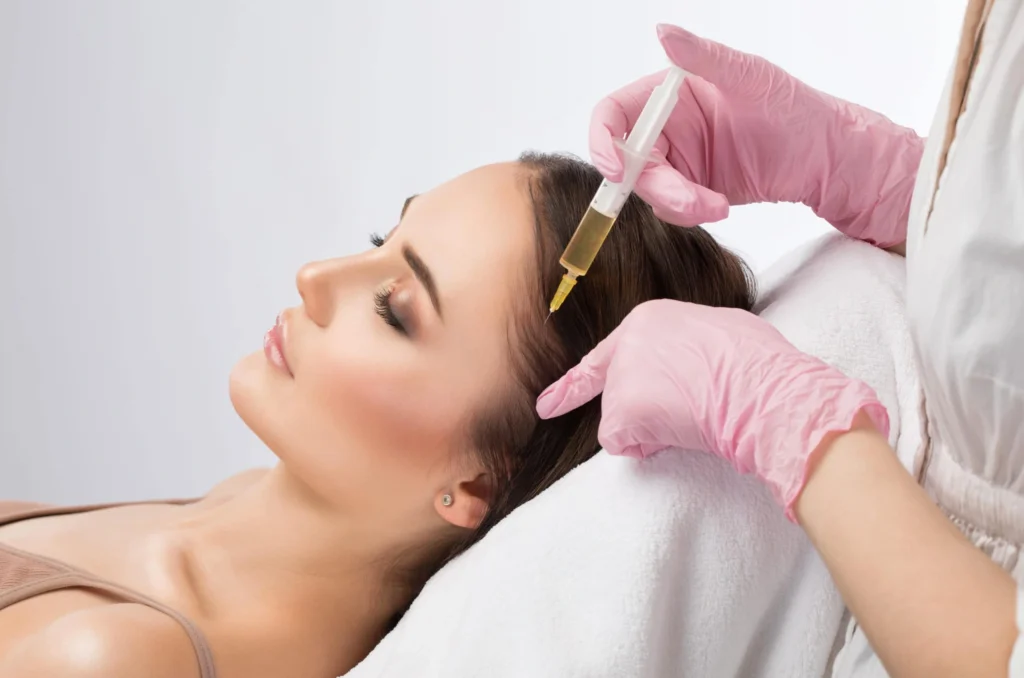
PRP (Platelet-Rich Plasma) hair therapy is a medical procedure in which a small amount of the patient’s own blood is drawn, processed through a centrifuge to concentrate the platelets, and then injected into the scalp. The concentrated platelets release growth factors — including PDGF, VEGF, and EGF — that stimulate dormant hair follicles, increase blood supply to the scalp, and prolong the active growth phase of the hair cycle.
The result, across multiple clinical studies, is increased hair density, improved hair thickness, and measurable reduction in shedding — particularly in patients with androgenetic alopecia (pattern baldness) and diffuse hair thinning. It is non-surgical, requires no anaesthesia, and has a strong safety profile given that the treatment uses the patient’s own biological material.
PRP hair therapy is one of the fastest-growing regenerative treatments in European aesthetic and trichology clinics.
What Factors Determine PRP Hair Therapy Cost?
The cost of PRP hair therapy varies significantly across Europe, typically ranging from €150 to €800 per session depending on several variables:
1. Country and city location
Clinics in major metropolitan areas such as London, Paris, or Amsterdam typically charge premium prices reflecting higher operational costs. Clinics in smaller European cities or Central and Eastern Europe tend to offer more competitive pricing — often without any compromise in quality.
2. The quality of the PRP kit used
This is the single most important factor that many patients do not consider. Standard PRP kits produce platelet concentrations of 2–3x baseline. Advanced systems like the Ycellbio PRP Alopecia Kit, distributed in Europe exclusively by Revital Medica, achieve concentrations of 8–9x baseline — meaning significantly more growth factors delivered to each follicle per session. Higher concentration translates directly into better clinical outcomes, fewer sessions required, and higher patient satisfaction.
3. Number of sessions per treatment course
Most protocols recommend an initial course of 3–4 sessions spaced 4–6 weeks apart, followed by maintenance treatments every 4–6 months. Clinics offering package pricing for a full course often provide better value than per-session billing.
4. Clinician expertise and clinic overhead
The experience level of the administering clinician, clinic location, and equipment investment all contribute to per-session pricing. Top-tier clinics with specialised trichology teams command premium fees — and patients generally accept this when results are demonstrably superior.
PRP Hair Therapy Cost Breakdown for Clinics
For clinic owners and procurement managers, understanding cost per session is critical for setting profitable price points. The economics of PRP hair therapy are straightforward:
- PRP kit cost per session: typically €20–€60 depending on supplier and volume
- Centrifuge system: a one-time capital investment, or eliminated entirely through partner programmes
- Clinical time: approximately 30–45 minutes per session including preparation and injection
- Consumables and PPE: minimal additional cost per session
Revital Medica’s partner programme significantly improves these economics. Clinics ordering 25 or more Ycellbio PRP Kits per month receive a free premium centrifuge system — removing the most significant capital barrier to launching or scaling a PRP hair programme. Combined with Europe’s most competitive kit pricing, the cost per session is among the lowest available without any sacrifice in platelet concentration quality.
Why Kit Quality Directly Impacts Revenue
A common mistake for new clinics entering PRP hair therapy is choosing the cheapest kit to minimise cost per session. This approach frequently backfires. Lower concentration kits produce less dramatic results, leading to patient dissatisfaction, poor word-of-mouth, and higher churn. By contrast, clinics using high-concentration systems consistently report stronger treatment outcomes, higher patient retention rates, and a greater willingness to pay premium prices.
The Ycellbio system’s proprietary Tornado Technique maximises platelet yield in every preparation, ensuring that each session delivers the full therapeutic potential of PRP. The innovative slim-neck Y-tube design makes the platelet layer clearly visible, eliminating preparation errors and ensuring consistent quality across every patient.
Clinics using Ycellbio report visibly higher patient satisfaction — because the science behind the kit simply produces better results.
How Many PRP Sessions Are Needed for Hair Regrowth?
The number of sessions required depends on the severity of hair loss, the patient’s age, and the concentration of PRP used. As a general clinical guide:
- Mild to moderate hair thinning: 3 sessions over 3–4 months, with annual maintenance
- Moderate androgenetic alopecia: 4–6 sessions, with maintenance every 6 months
- Alopecia areata: 4–6 sessions, sometimes more depending on immune response
- Post-hair transplant recovery: 2–4 sessions to accelerate graft survival and density
Higher platelet concentration reduces the number of sessions needed to achieve visible results — which is a compelling value proposition both for patients (fewer appointments, faster outcomes) and for clinics (improved throughput efficiency).
Is PRP Hair Therapy Near Me Worth the Cost?
For patients searching for ‘PRP hair therapy near me’, the most important consideration is not simply proximity but the quality of the PRP system the clinic uses. A clinic 10 minutes away using a basic, low-concentration kit may produce inferior results compared to a clinic 30 minutes away using Ycellbio technology.
Before committing to a course of treatment, patients should ask:
- What PRP system does your clinic use, and what platelet concentration does it achieve?
- Is the device FDA-registered or CE-marked?
- How many sessions do you recommend, and why?
- Can you show before-and-after documentation from previous patients?
Frequently Asked Questions
Q: What is the average cost of PRP hair therapy in Europe?
A: Costs vary widely but typically range from €150 to €800 per session. Package deals for a full course of 3–4 sessions often offer better value. The quality of the PRP kit used matters far more than the headline price per session.
Q: How is PRP hair therapy different from a hair transplant?
A: PRP hair therapy is entirely non-surgical and uses the patient’s own blood to stimulate existing follicles. A hair transplant surgically relocates follicles from one area to another. PRP is often used alongside transplants to improve graft survival.
Q: Is PRP hair therapy safe?
A: Yes. Because PRP uses the patient’s own blood, the risk of allergic reaction or rejection is essentially zero. FDA-registered devices such as the Ycellbio PRP Alopecia Kit are manufactured to strict sterility standards for additional safety.
Q: Where can clinics source high-quality PRP hair kits in Europe?
A: Revital Medica is the official Ycellbio distributor in Europe, supplying PRP Alopecia Kits to clinics across the continent with fast delivery and Europe’s best pricing.
Conclusion
PRP hair therapy is one of the most cost-effective and scientifically validated treatments for hair loss available today. For clinics, the economics are compelling — particularly when using a high-concentration system like Ycellbio that maximises results, patient retention, and revenue per course. For patients, understanding that cost per session should be evaluated alongside platelet concentration quality ensures they choose a provider that will genuinely deliver results.