
Introduction
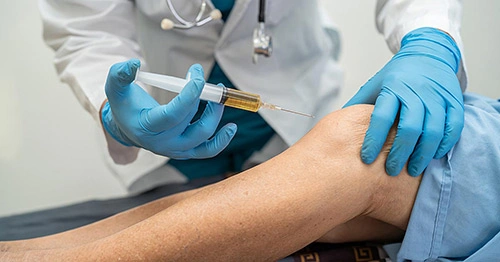
Knee pain is one of the most prevalent orthopaedic complaints in Europe, affecting both active patients with sports injuries and older populations dealing with osteoarthritis. With surgical intervention carrying significant risk, cost, and recovery time, clinicians and patients alike are turning to PRP (Platelet-Rich Plasma) therapy as the leading non-surgical alternative.
Searches for ‘best PRP treatment for knee pain’ and ‘top PRP therapy for joints’ reflect the growing public awareness of this treatment. For clinics, it represents one of the highest-volume, commercially significant PRP application areas — making it an essential service to offer with the best available technology.
Why Knee Pain Is Ideal for PRP Therapy
The knee joint is an ideal target for PRP therapy for several reasons. First, it is a synovial joint with a closed capsule — making intra-articular injection straightforward and ensuring the PRP concentrate remains at the treatment site. Second, cartilage has limited intrinsic healing capacity due to poor vascularity, making external biological stimulation from concentrated growth factors particularly impactful. Third, the inflammatory environment of arthritic joints responds well to the anti-inflammatory and anabolic properties of PRP.
Clinical evidence from multiple randomised controlled trials and systematic reviews supports PRP as superior to:
- Hyaluronic acid (viscosupplementation) injections
- Corticosteroid injections at 6 and 12 months post-treatment
- Saline placebo in blinded trials
Conditions Treated with PRP Knee Injections
Knee Osteoarthritis (Grades 1–3)
PRP is most effective for early to moderate knee osteoarthritis. Growth factors reduce synovial inflammation, protect remaining cartilage from further degradation, and stimulate the production of proteoglycans — the structural components of healthy cartilage. Patients typically report significant improvement in pain scores, joint stiffness, and functional mobility within 4–8 weeks of treatment.
Meniscal Injuries
Partial meniscal tears — particularly in the vascular (outer) zone — respond well to PRP due to the rich blood supply in this area. PRP amplifies the natural healing response, potentially avoiding the need for surgical meniscectomy in selected patients.
Ligament Injuries (ACL, MCL)
PRP injections around injured ligaments accelerate collagen synthesis and tissue remodelling. In partial ACL tears and MCL sprains, PRP can significantly reduce recovery time and restore joint stability without surgery.
Patellofemoral Syndrome
Chronic anterior knee pain caused by cartilage irritation under the patella responds to PRP through reduction of inflammatory mediators and stimulation of cartilage surface repair.
Post-Surgical Recovery
Applied following arthroscopic procedures or total knee replacement, PRP accelerates soft tissue healing, reduces post-operative inflammation, and shortens recovery timelines — improving patient satisfaction and surgical outcomes.
The Best PRP Injection Protocol for Knee Pain
The optimal protocol for PRP knee injections varies by condition and severity. As a general clinical framework:
- Mild osteoarthritis or ligament sprain: 1–2 injections, 4 weeks apart
- Moderate osteoarthritis or partial meniscal tear: 3 injections, 4–6 weeks apart
- Severe osteoarthritis (Grade 3): 3–4 injections with maintenance every 6 months
Image guidance using ultrasound is strongly recommended for intra-articular injections to ensure accurate placement within the joint space. This improves both safety and efficacy.
High platelet concentration is the single most important variable in determining PRP knee injection outcomes — Ycellbio delivers 8–9x baseline, significantly outperforming standard systems.
Why Platelet Concentration Is Critical for Knee Outcomes
Not all PRP preparations are equal. Research consistently shows that platelet concentration correlates directly with growth factor delivery and clinical outcomes. Standard PRP kits producing 2–3x platelet concentration may provide modest benefit; however, systems achieving 8–9x concentration — such as the Ycellbio Orthopedic Kit — deliver meaningfully more PDGF, TGF-β, and VEGF to the joint environment.
This matters clinically because knee cartilage has a high biological threshold for repair signalling. Subthreshold PRP concentrations may stimulate some response but fail to reach the level required for durable cartilage regeneration. High-concentration PRP clears this threshold consistently.
Ycellbio Stem Cell Orthopedic Kit: Beyond Standard PRP
For clinics treating advanced joint degeneration, the Ycellbio Stem Cell Orthopedic Kit offers an additional dimension of regenerative potential. This specialised system simultaneously isolates concentrated platelets and mesenchymal stem cells from a single preparation — providing both the growth factor stimulus of PRP and the regenerative cell population of stem cell therapy.
Indications for the combined PRP + stem cell approach include:
- Grade 3–4 knee osteoarthritis as an alternative to joint replacement
- Full-thickness chondral defects requiring cellular regeneration
- Complex ligament injuries with associated cartilage damage
- Post-surgical cartilage restoration programmes
PRP vs Surgery for Knee Pain: The Case for Biological Treatment First
Total knee replacement is a major surgical procedure with a recovery period of 3–6 months, significant complication risk, and a finite implant lifespan. For patients with moderate knee osteoarthritis who still have functional joint space, PRP therapy offers a compelling case for biological management first:
- PRP requires no anaesthesia or hospitalisation
- Recovery is typically 24–48 hours of mild soreness
- Multiple courses can be administered over years
- PRP does not close the door to future surgical intervention if required
European orthopaedic guidelines increasingly acknowledge PRP as a valid, evidence-based option for managing knee osteoarthritis before considering surgery. Clinics that can offer high-quality PRP programmes are positioned at the forefront of this shift in standard of care.
Frequently Asked Questions
Q: Is PRP the best treatment for knee pain?
A: For non-surgical candidates with osteoarthritis, meniscal injury, or ligament damage, PRP is among the most effective biological treatments available, with evidence showing superiority over corticosteroids and hyaluronic acid at 6–12 months.
Q: How long does PRP knee injection take?
A: The preparation of PRP with an advanced system like Ycellbio takes approximately 5 minutes. The injection itself takes 5–10 minutes, so most patients are in and out within 30–45 minutes.
Q: How many PRP knee injections do I need?
A: Most protocols recommend 2–3 injections spaced 4–6 weeks apart, followed by maintenance injections every 6–12 months depending on response.
Q: Are PRP knee injections painful?
A: Mild discomfort during injection is common, often managed with topical anaesthetic. Some patients experience 24–48 hours of increased soreness after injection as the inflammatory response initiates healing — this is normal and expected.
Conclusion
PRP therapy is now widely recognised as the best non-surgical treatment option for knee pain across a spectrum of conditions — from sports injuries to degenerative osteoarthritis. For European clinics, investing in a high-concentration PRP system is not optional if you want to deliver results that match patient expectations and clinical evidence.
Revital Medica supplies European orthopaedic clinics with the Ycellbio PRP and Stem Cell Orthopaedic Kits — the highest-concentration, fastest-preparation, and most clinically trusted system available in Europe today.