
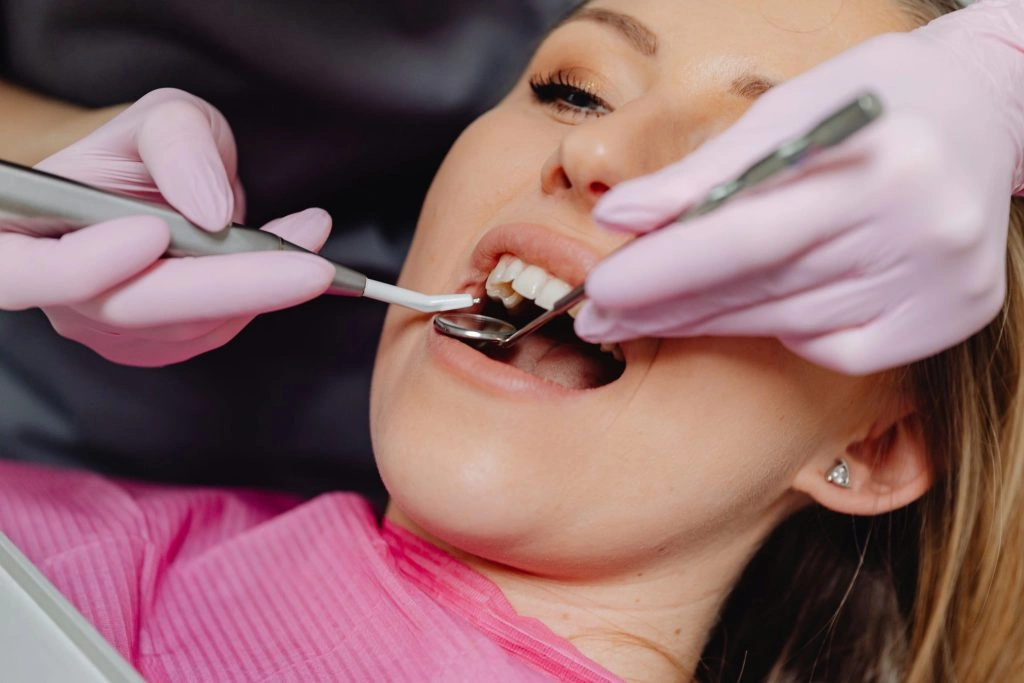
Introduction
Regenerative dentistry is no longer a niche discipline — it is rapidly becoming a standard of care expectation in progressive dental practices across Europe. At the centre of this shift is PRF: Platelet-Rich Fibrin, a second-generation platelet concentrate that offers dental surgeons a powerful, entirely biological tool to enhance healing, support bone regeneration, and improve outcomes across a wide range of oral surgical procedures.
This article provides a comprehensive, evidence-based guide to the benefits of PRF in dentistry, how it works at the cellular level, and how clinics can implement PRF preparation efficiently using the Ycellbio PRF Dentistry Kit from Revital Medica.
What Is PRF in Dentistry?
Platelet-Rich Fibrin (PRF) is an autologous biological concentrate derived from the patient’s own blood through centrifugation — without the addition of any anticoagulants, thrombin, or additives. Unlike its predecessor PRP (Platelet-Rich Plasma), PRF produces a three-dimensional fibrin membrane scaffold that acts as a slow-release reservoir of growth factors at the surgical site.
This membrane can be:
- Placed directly into extraction sockets to prevent dry socket and accelerate soft tissue healing
- Layered around dental implant fixtures to enhance osseointegration
- Mixed with bone graft particulate to improve graft vascularisation and new bone formation
- Applied to periodontal defects to stimulate tissue regeneration
- Used as a membrane over sinus lift grafts to protect and vascularise the augmented area
Because PRF is derived entirely from the patient’s own blood, the risk of adverse reaction, rejection, or allergy is essentially zero — making it one of the safest biological agents available in dental surgery.
How PRF Works in Dentistry: The Biology
Understanding how PRF works requires a brief look at the biology of wound healing. Normal tissue repair progresses through four phases: haemostasis, inflammation, proliferation, and remodelling. PRF acts as a biological accelerator across all four phases:
Haemostasis and clot stabilisation
The PRF membrane forms a stable fibrin matrix at the wound site, providing an immediate scaffold for platelet aggregation and clot formation — dramatically reducing post-operative bleeding and socket exposure.
Growth factor release and immune modulation
Platelets embedded within the fibrin matrix release growth factors — including PDGF, TGF-β, VEGF, and EGF — in a sustained, physiological manner over 7–14 days. This is fundamentally different from PRP, which releases growth factors rapidly. The slow release of PRF more closely mimics the body’s natural healing kinetics, creating a sustained anabolic environment at the surgical site.
Angiogenesis and tissue ingrowth
VEGF (Vascular Endothelial Growth Factor) released from the PRF membrane stimulates the formation of new blood vessels within the wound — a process called angiogenesis. This vascularisation is essential for delivering nutrients and oxygen to healing tissue and new bone matrix.
Osteoblast stimulation and bone regeneration
TGF-β and PDGF directly stimulate osteoblast activity — the cells responsible for new bone formation. In extraction sites, implant beds, and sinus lift procedures, this osteoblastic stimulation significantly accelerates the rate of bone deposition and matrix mineralisation.
PRF’s slow-release growth factor profile over 7–14 days makes it biologically superior to simple PRP for most dental surgical applications.
Key Benefits of PRF in Dentistry
1. Faster healing after tooth extraction
Dry socket (alveolar osteitis) is one of the most common and painful post-extraction complications, affecting 2–5% of all extractions and up to 30% of mandibular molar extractions. Placing a PRF membrane into the extraction socket significantly reduces dry socket incidence by providing immediate clot stabilisation and sustained growth factor release. Multiple clinical studies demonstrate PRF reduces healing time by 30–50% compared to unaugmented extraction sockets.
2. Enhanced osseointegration around dental implants
Implant success depends fundamentally on osseointegration — the biological bonding between the implant surface and surrounding bone. PRF applied around implant fixtures accelerates peri-implant bone formation, reduces the crestal bone loss that can compromise long-term implant stability, and supports faster re-epithelialisation of soft tissue around the implant emergence profile. Multiple studies demonstrate higher implant stability quotient (ISQ) values in PRF-treated implant sites at 3 and 6 months post-placement.
3. Improved bone graft survival in sinus lift procedures
Sinus augmentation (sinus lift) is one of the most technically demanding implant-related procedures, requiring sufficient bone volume in the posterior maxilla before implant placement. Mixing PRF with bone graft particulate improves graft handling, promotes graft vascularisation, and significantly increases the rate of new bone formation. Clinical evidence shows PRF-augmented sinus lifts achieve higher bone density and faster maturation compared to graft alone.
4. Superior soft tissue healing in periodontal surgery
In periodontal regenerative procedures, PRF membranes serve as a barrier membrane to exclude epithelial migration from the regenerating site — while simultaneously delivering growth factors to stimulate periodontal ligament and alveolar bone regeneration. The combination of physical barrier and biological stimulation in a single, absorbable membrane represents a significant advance over traditional synthetic barrier membranes.
5. Reduced post-operative pain and swelling
The anti-inflammatory and immune-modulatory properties of PRF — particularly its influence on macrophage polarisation toward reparative rather than inflammatory phenotypes — translate into measurably reduced post-operative pain, swelling, and trismus (jaw stiffness). Patients treated with PRF consistently report faster return to normal function and reduced need for analgesic medication.
How to Use PRF in Dentistry: The Ycellbio PRF Kit Protocol
One of the most significant barriers to widespread PRF adoption in dental practice has historically been the perception of complexity. The Ycellbio PRF Dentistry Kit addresses this directly with a preparation protocol that takes just 5 minutes from blood draw to chairside application:
- Draw 10–15 ml of venous blood from the patient — no anticoagulants required
- Load the sample into the Ycellbio tube and centrifuge for the specified protocol time
- Remove the tube and identify the fibrin clot layer using the visible Buffy Coat marker
- Extract and compress the fibrin layer into a membrane using the PRF kit press
- Apply the PRF membrane immediately to the surgical site
The entire preparation process is simple enough to be performed by trained clinical staff without interrupting the surgical workflow. Because the Ycellbio system is compatible with both swing-out and fixed-angle centrifuges, most dental clinics can implement PRF immediately without any new equipment investment.
Sourcing a PRF Dental Kit in Europe
The quality of the PRF kit — particularly centrifugation parameters and tube design — directly influences the quality of the fibrin membrane produced. Not all PRF kits are equivalent. When selecting a PRF dental kit for your practice, consider:
- Centrifugation compatibility with your existing system
- Membrane consistency and growth factor yield per preparation
- FDA or CE regulatory status of the device
- Supplier reliability, delivery speed, and pricing for European dental practices
- Clinical support and protocol guidance available from the supplier
Frequently Asked Questions
Q: What is the difference between PRP and PRF in dentistry?
A: PRP releases growth factors rapidly and requires anticoagulants. PRF forms a fibrin membrane that releases growth factors slowly over 7–14 days without any additives — making it simpler to prepare and more biologically aligned with natural healing.
Q: Is PRF safe for dental procedures?
A: Yes. PRF is derived entirely from the patient’s own blood and contains no additives or foreign materials, making it biocompatible and essentially free from adverse reaction risk.
Q: How much does PRF add to the cost of a dental procedure?
A: Kit cost per preparation is modest — adding an affordable per-session amount that is typically passed to the patient as a treatment enhancement. The clinical benefits in terms of reduced complications and faster healing far outweigh the marginal cost.
Q: Where can dental clinics buy PRF kits in Europe?
A: Revital Medica is the official European distributor for Ycellbio PRF Dentistry Kits, supplying dental practices across Europe with fast delivery and competitive pricing.
Conclusion
The benefits of PRF in dentistry are well-established, clinically significant, and applicable across a wide range of everyday dental surgical procedures. From extraction socket management to complex sinus augmentation, PRF consistently enhances outcomes, reduces complications, and improves patient experience. For dental clinics in Europe, the Ycellbio PRF Dentistry Kit from Revital Medica offers the simplest, most reliable, and most cost-effective route to integrating PRF into daily practice